


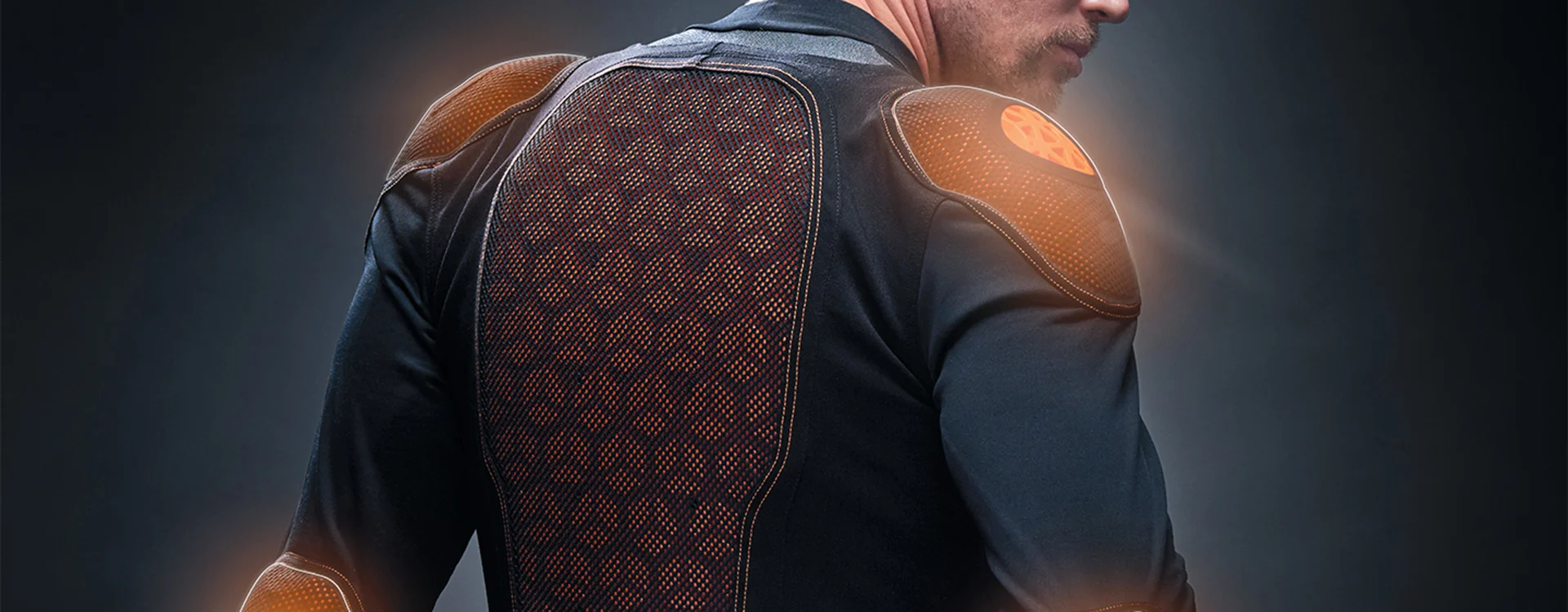
Protector guide
Defence & comfort – the cornerstones of all Rukka motorcycling equipment. We achieve the ultimate combination of these qualities by using patented D3O® protector technology.

How does D3O® work?
When riding normally, D3O® protectors are soft and flexible, but in the case of a crash, they harden instantaneously to absorb and distribute the impact energy. This is made possible by intelligent molecules that flow freely when undisturbed, but lock together on shock. After impact, the material immediately returns to a flexible state.
RUKKA D3O® Air XTR
To stay at the forefront of protector technology, Rukka worked together with D3O® to develop a unique material composition, which was then used in the production of an exclusive line of Rukka D3O® Air limb, back and chest protectors. This line of protectors was designed to maximise coverage while allowing greater mobility and comfort.
The next generation of this cooperation, the Rukka D3O® Air XTR protectors, leverage a unique ergonomic design and highly ventilated airflow geometry for top-tier comfort.
What is the difference between level 1 and level 2 protectors?
Protective equipment sold in the European Union must be tested according to certain CE standards. Limb protectors, back protectors and chest protectors for motorcycling are classified into one of two protection levels: level 1 and level 2.
The difference between these two lies in the amount of force that they are allowed to transmit. Level 1 chest and back protectors may transmit on average a maximum of 18kN (with no single value exceeding 24 kN), while for level 2 protectors, the maximum is only half that at 9 kN (with no single value exceeding 12 kN).
That means level 2 protectors have higher shock absorption, meaning they are more protective across the line. However, there may be a trade-off: level 2 protectors will generally be thicker and bulkier to hit that higher level of protection.
Which protectors are needed?
The amount of protection needed always depends on the riding activity and requires a careful risk assessment by the rider.
Generally, at least these high-risk areas of the body should be equipped with protectors:
Shoulders
Elbows
Back
Hips
Knees
A chest protector is usually a good addition and for some activities, more coverage for example in the shins may be needed, but it all depends on where you are riding and how. The riskier your riding activity and the higher your speeds, the more you should invest in armour.