


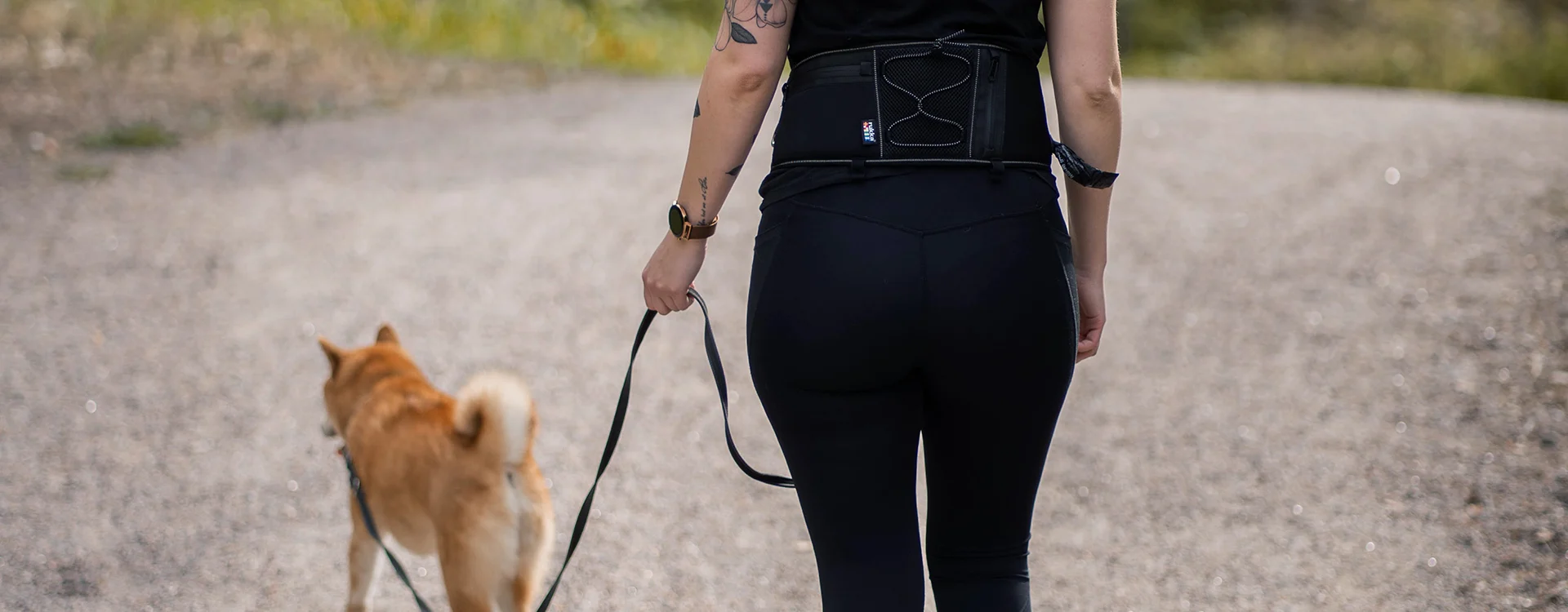
Going for a run with your dog
What to consider when starting running with your furry friend? Check out Rukka's tips before heading out on the trails together!
Running with a four-legged friend offers both owner and dog exercise and a joyful time together. A new hobby together will strengthen the relationship between you and your dog, and it can also be much more fun than running around on your own. These steps will get you off to a good start with your new hobby together.
1. Make sure the sport is suitable for your dog
Some dog breeds and individuals are better suited to dog running than others. Therefore, the first thing to think about is whether your dog is a potential long-distance runner. Running can be ideal for active breeds that require a lot of exercise, while a small companion dog accustomed to short walks around the block can be difficult to motivate. Nor is it good for the dog to suddenly go for a hard run if it is not used to it. Jogging isn’t also suitable for small puppies, as heavy running burdens the muscles and joints of a growing body. Small puppies must also be given peace for getting to know the wide world and sniff around.
In conclusion, it is good to ask yourself - is running suitable for my dog physically, and most importantly; is it something he or she would enjoy doing?
2. Get the right gear
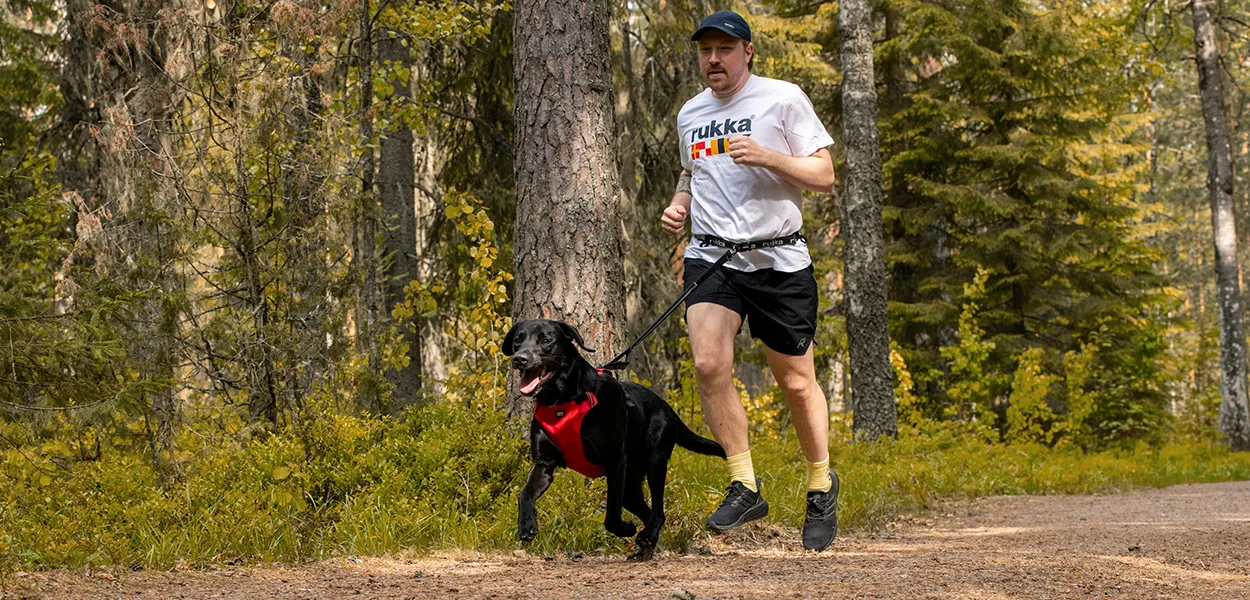
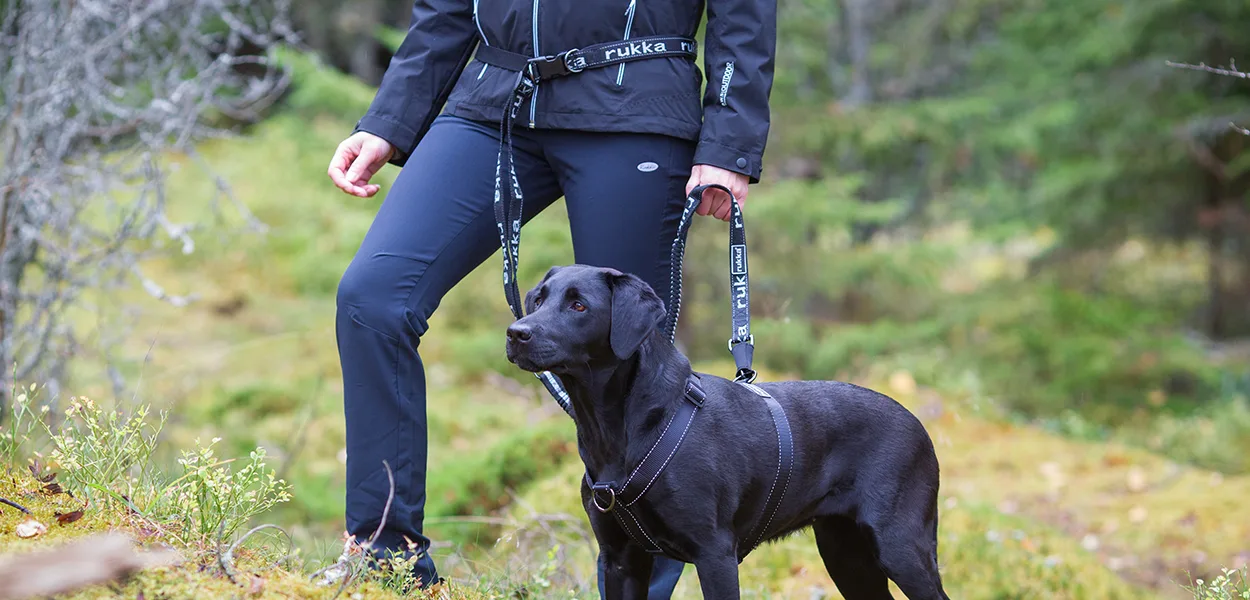
Running with your dog does not require a lot of equipment, but a few products could make it a bit easier and more comfortable. For example, a running belt allows the owner not to have to hold the dog's leash all the time, so they can move their hands freely around as they feel best while running. At the same time, the dog stays safely under the owner's control and there's no need to worry about them running away. Some running belts can also be equipped with a variety of small items, such as a water bottle, poop bags or dog treats. The comfort of running can also be increased by pairing the belt with a flexible extension leash to soften the jolts caused by the dog's sudden movements.
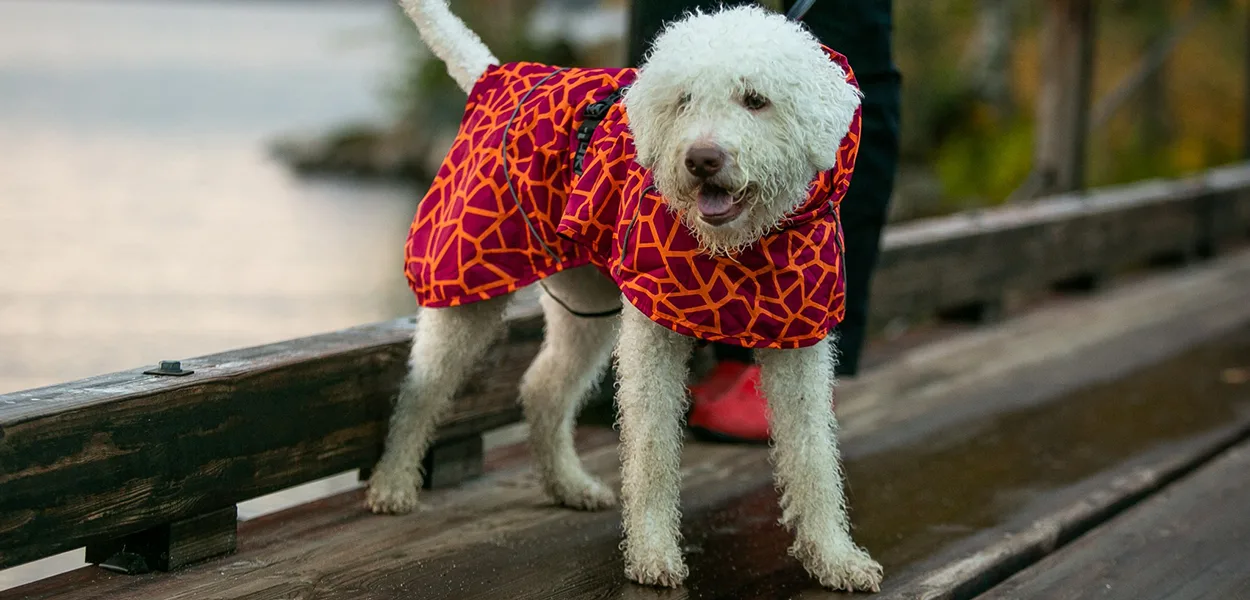
Before heading out it’s also good to take the season and weather into account in case your dog needs some extra clothing or equipment. For example, when running in warm summer temperatures, it may be necessary to offer your dog some relief with cooling products, and it's always a good idea to have water with you. When it’s raining you might want to protect your dog’s fur from getting all wet and muddy with a raincoat or a protective overall. In winter frosts, a longer run can be enabled by warm boots that protect your buddy's paws from freezing. During the darker seasons and evenings, it's also a great idea to increase your dog's visibility with safety gear, such as a high-visibility scarf or vest. Also, make sure your dog has a well-fitting harness or collar.
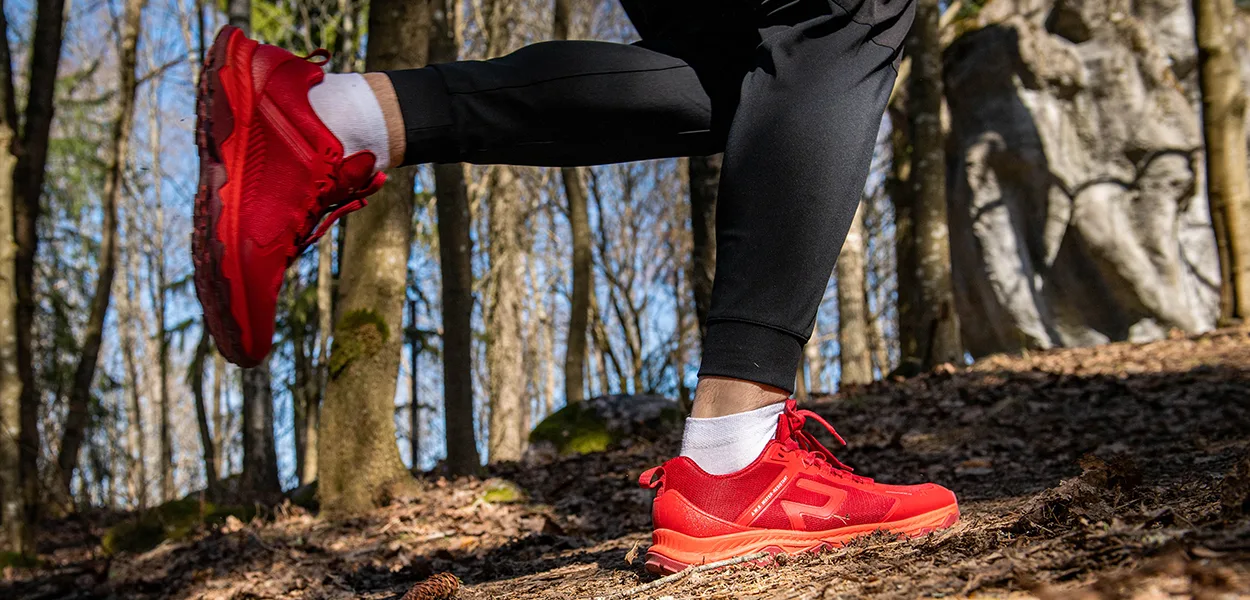
In addition to various pet accessories, the owner’s gear, such as running shoes and proper clothing, should be looked after as well so that running will be a good experience for both of you. It's worth taking a look at the Rukka Sport selection for people if your shoes or apparel are in need of an upgrade. Weatherproof and high-tech gear allow you to run in all weathers, not to mention matching up your outfits Rukka-style. What an eye-catching team on the running trail!
3. Prepare for the run in advance
Running with your dog is not comparable to a slightly faster walk. The owner needs to create their own new rules for the run to make it a success. A dog walking nicely alongside you makes it easier to run, so it's a good idea to practise this skill with your dog well before you head out on the trail. It's also a good idea to pay attention to how much you allow your dog to sniff around during the run. You can't exactly call your walk a run if you stop at every interesting odour. This can be achieved through long-term practice and various contact exercises, which you should also train beforehand.
Before you start, you should also think about the kind of terrain you're going to be running in. Like people, it matters to dogs what kind of surface the activity takes place on. Hard asphalt, especially in summer, can even be dangerously hot for your dog's paws and the heavier impact of running can put more strain on the body than running on softer surfaces. Dirt roads and trails may be better alternatives for this activity.
4. Things to consider on your first run
The first few runs should be taken fairly slowly so that the experience doesn't become too hard for either the owner or the dog. Slow and steady will pay off, and there's no need to worry if you don't get it right the first time. Your dog may not immediately understand, what it's all about and may act like it’s some fun game. Guide your dog gently and clearly. However, during the first runs, it's absolutely essential to go on the dog's terms, and the owner must not only keep an eye on his own ability but also watch how their dog is doing. Therefore, you should consider the first run as a practice round, and only in the later sessions can you go a bit longer and harder.
Are you completely new to running altogether or has it been a while since your last run? Click here for Rukka's tips on how to start running:
Rukka – back on track!

5. Ensure appropriate recovery time
Both humans and dogs need time to recover, which is especially important when starting a new exercise activity. Recovering requires time, good nutrition and rest. You should not put your dog under too much stress on the first day of running, so take it easy for the rest of the day. Your dog may not be ready for another run the very next day, so give him or her time to rest and stick to lighter walks instead. Dogs often take care of their own rest, but you need to make sure they have enough peace and quiet to do so. The dog's nutritional intake is often predetermined, but please note that energy consumption may be higher after intense exercise. If your dog seems very hungry, it may be necessary to increase the ration slightly, at least while the training is continuing.
+ Canicross
Running with your dog is fine as just a regular exercise, but if you happen to get really into this shared activity, there's a sport for it too: Canicross. It’s faster than basic jogging and often requires a bit more equipment. In Canicross, the dog more or less pulls the person behind on an elastic leash, but the owner is also running. Besides that, the idea is basically the same as in regular dog running. It is also possible to compete in Canicross, putting both the owner's and the dog's fitness to the test.